Figures
I’m a big fan of reducing the (play-distorting, -restricting, and/or -prohibiting) effect large stands have on gaming, and so chose to model squads with three 6mm figures on 10x15mm bases (~10 x 15m footprint at the game’s nominal 1:1000 ground scale). While a bit fiddly, they allow greater flexibility for players in the placement of their forces within the tabletop terrain where larger, more ‘normal-sized’ stands would not allow them to do what they’d like with their troops — many such examples can be seen/imagined in a study of the tabletops used where to-scale fields (or orchards) could not hold a platoon if the player wished to occupy it using, say, 25x32mm FoW bases for each squad. Using smaller stands/figures also helps reduce the ‘translation’ players must do (i.e.: What You See to What You Get) when viewing the tabletop battlefield to assess the situation.
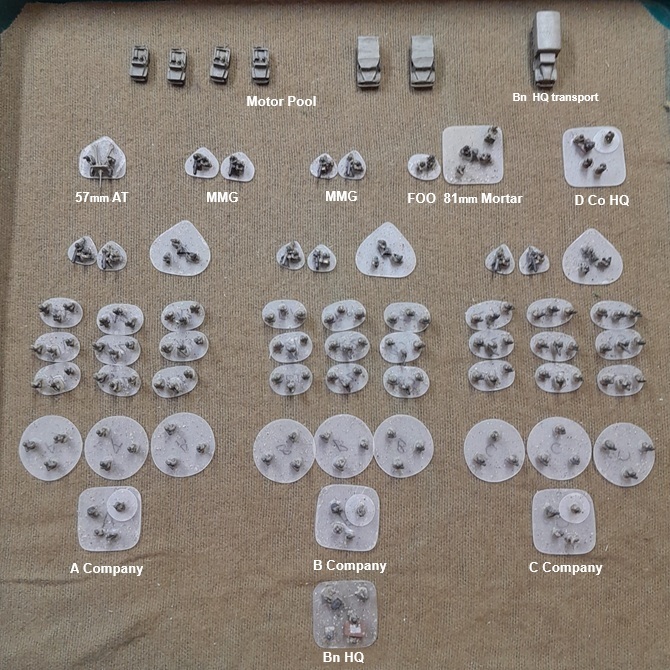
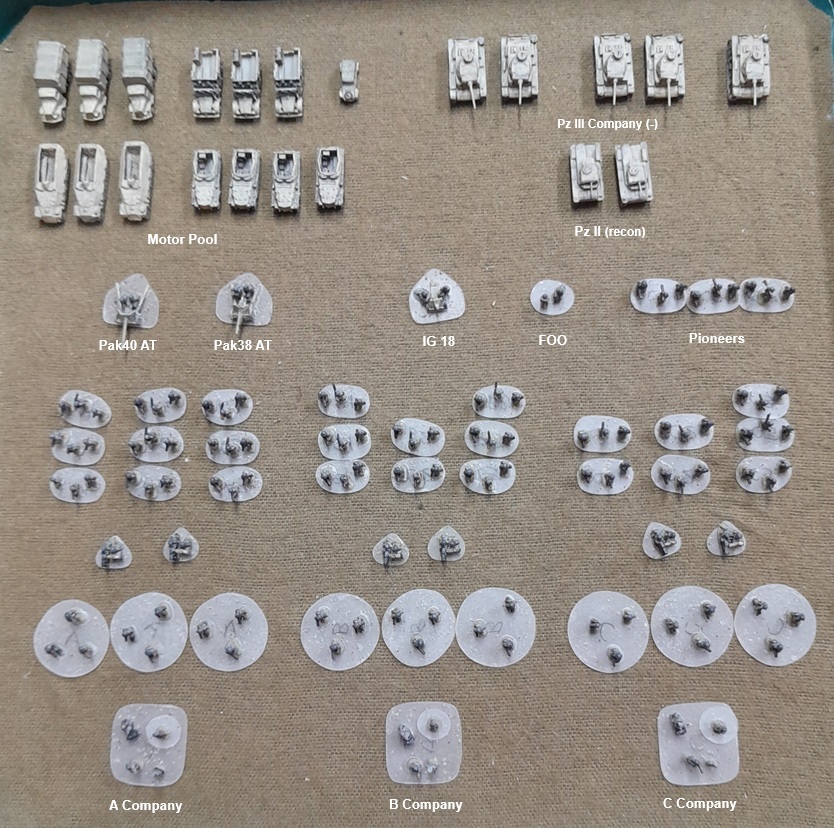
6mm (mostly)H&R minis. The 3-figure 20mm round pieces are Combat Patrol markers. The single figure on the Company HQ bases (magnetically attached) represents the Coy.HQ order which can be placed either: with another unit that is given a second order, with the Battalion HQ if used to increase those orders, or removed to indicate the HQ’s “Hesitant” status.
When I run out of 6mm figs/bases I use 15mm figs (based on ~1cm rounds for CoC).
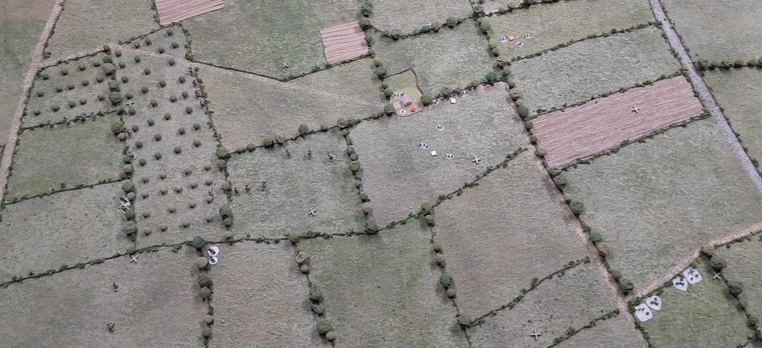
Comparison of 6 vs 15mm figs (on a Tunisian table). The platoon on the right/bottom is 200m away from the farm and spread across a 100m frontage…but it’s difficult to square that with the visual picture of the situation presented by the 15mm figs on small FoW bases (even if only using a single mini per squad as shown in the BUA) without players translating WYS to WYG – it would be even harder if the BUA and all the other terrain were also scaled to “look right” with 15mm figs. The 6mm minis are still 3x too large, but do a better job (imo) or presenting players with a ‘feel’ for the size/scope of the battlefield…or not
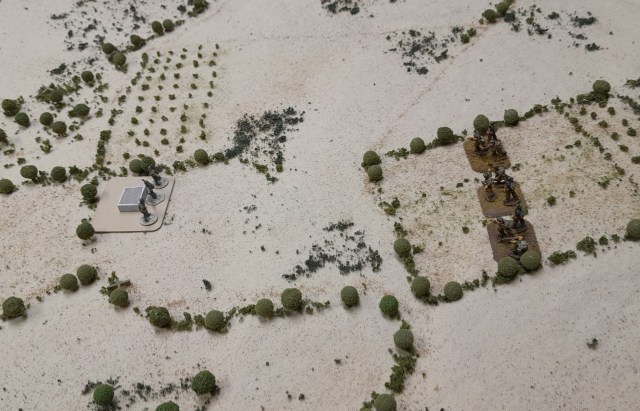
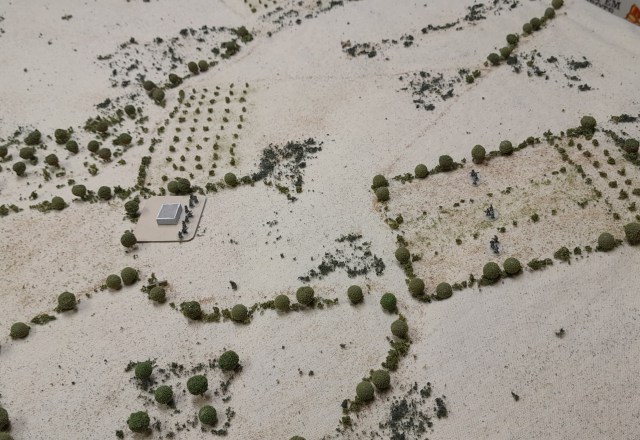
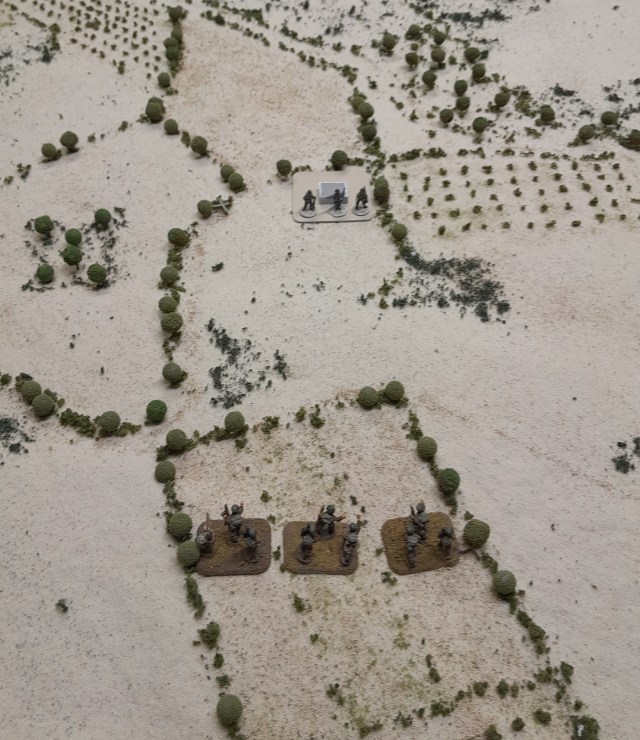
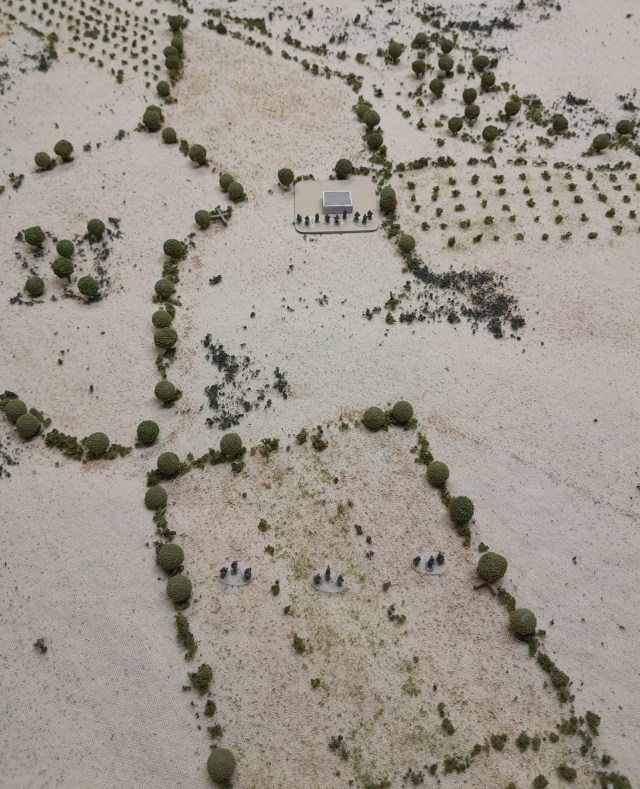
(It may be that my limited experience/history with gaming pre-1900 mass-formations is the source for my aversion to using “giants” on the tabletop…dunno)
It doesn’t fit! A common defense in support of larger bases is their representation of by-the-book frontages. The trouble with this is that players are forced to use such “correct” formations even when they would be tactically unsound (or impossible) in some situations during a battle/game. Smaller (minimum-sized) bases, however, can represent any formation possible to larger ones as well as tighter/closer ones when/if the player chooses. Bottom line: It should be up to players -not the miniatures- to decide how their troops are positioned/deployed.
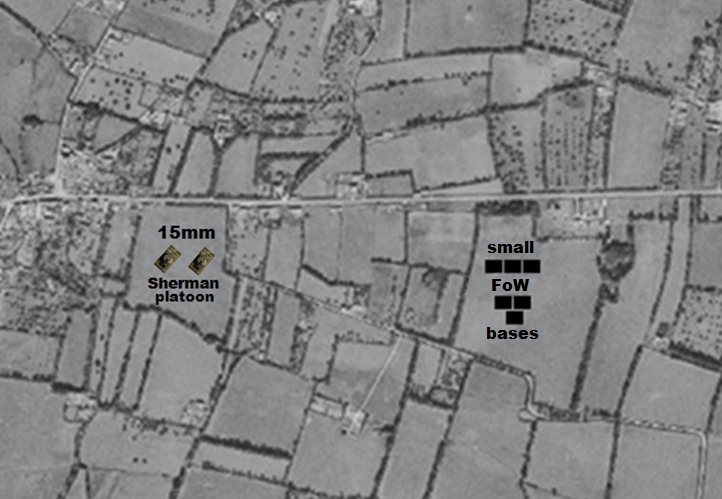
(I realize that not all battlefields present such restricted terrain, but limiting scenario choices to just “open” spaces -and/or altering/fudging the historical ground- seems to be an avoidable difficulty by simply using minis/terrain more in line with the game’s ground scale…or not)
The “Empty Battlefield”: Highlighting the benefit to the battlefield picture presented to players using smaller figs/stands.
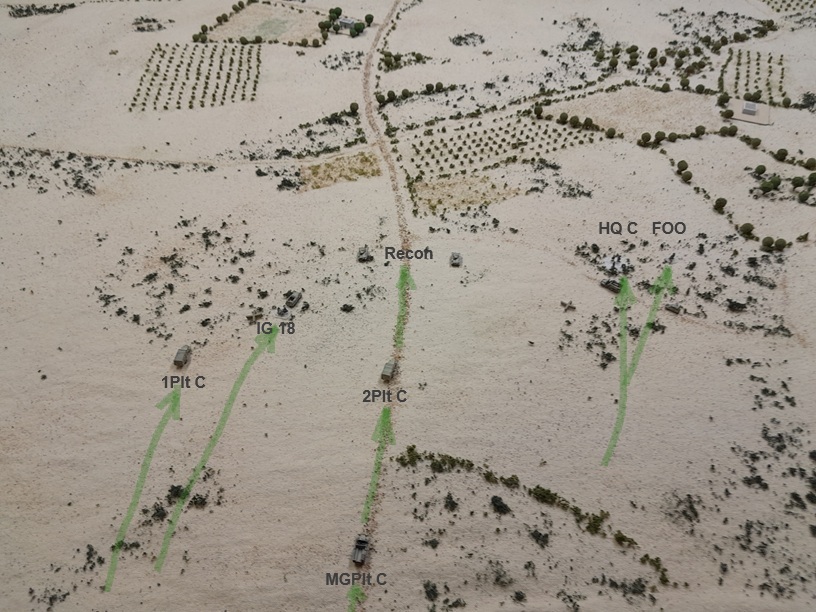
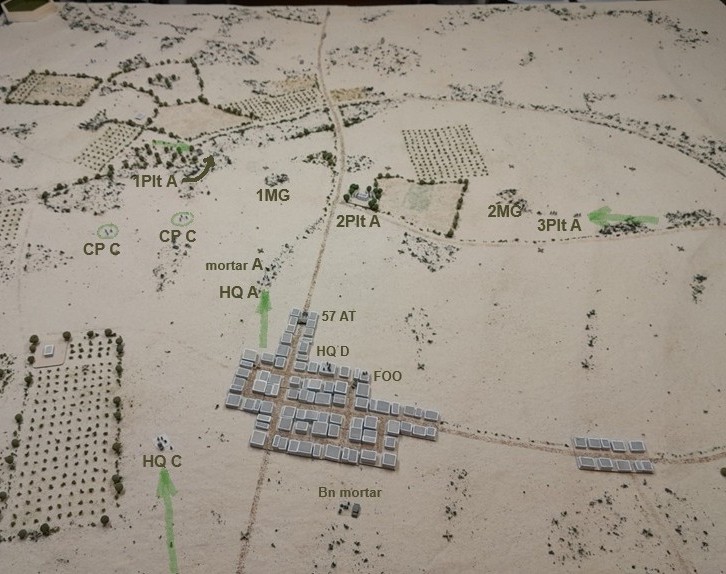
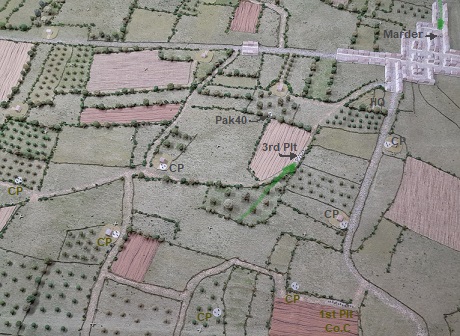
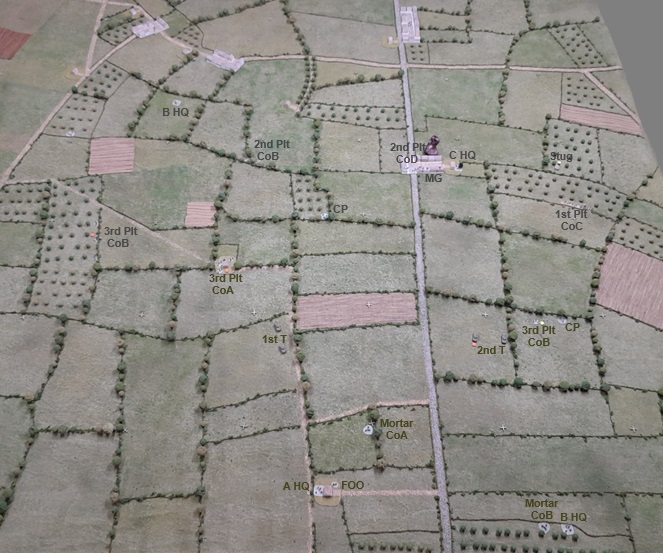
Ground / Contours
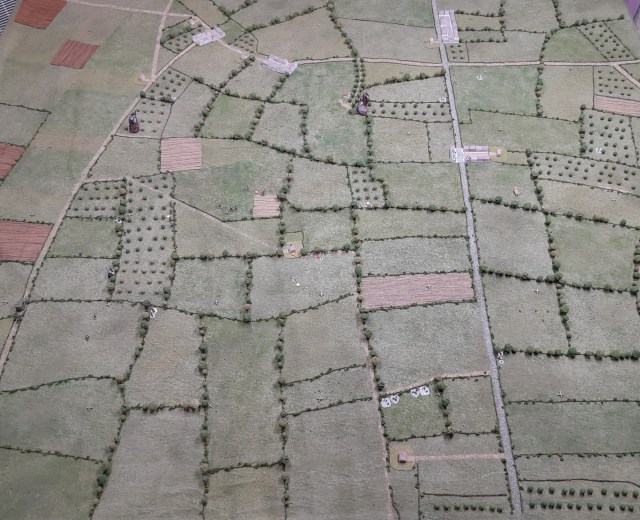
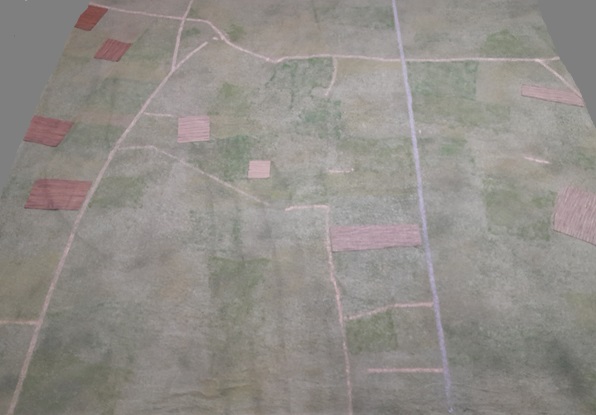
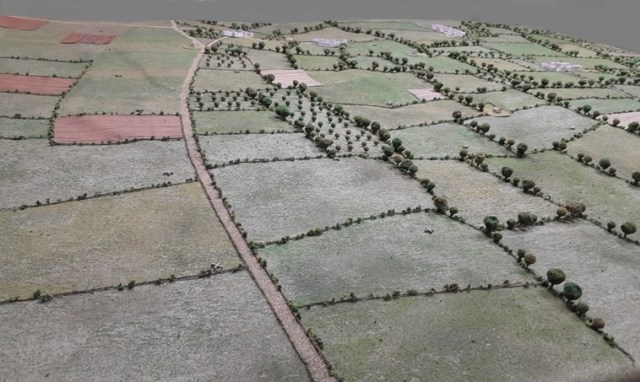
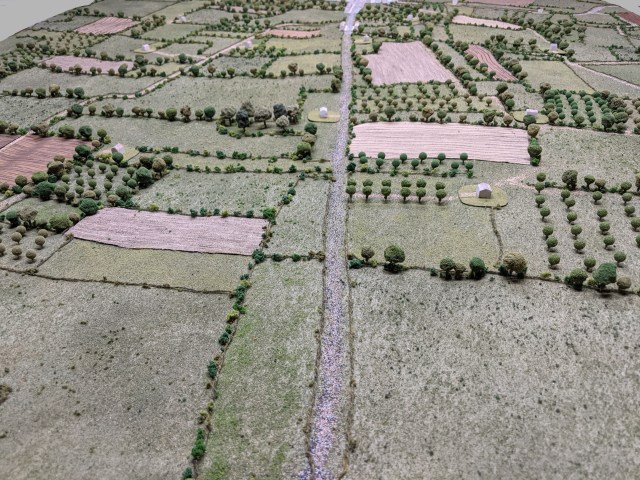
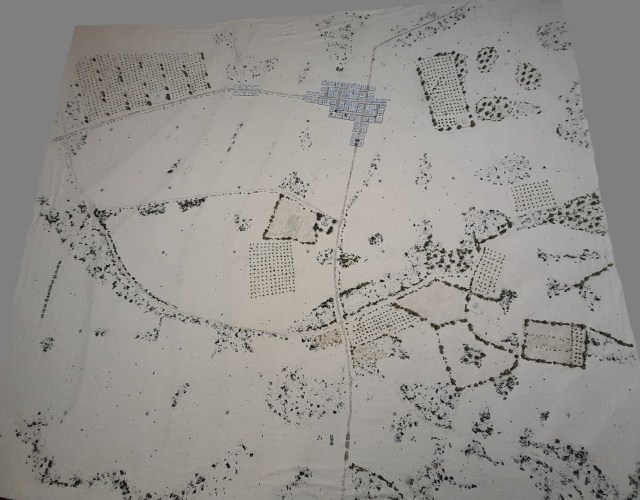
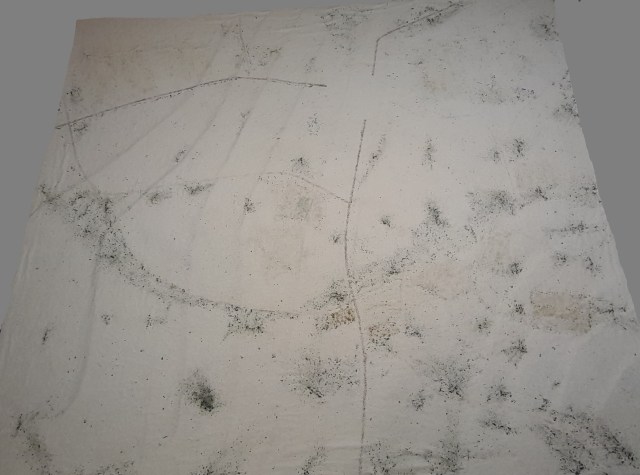
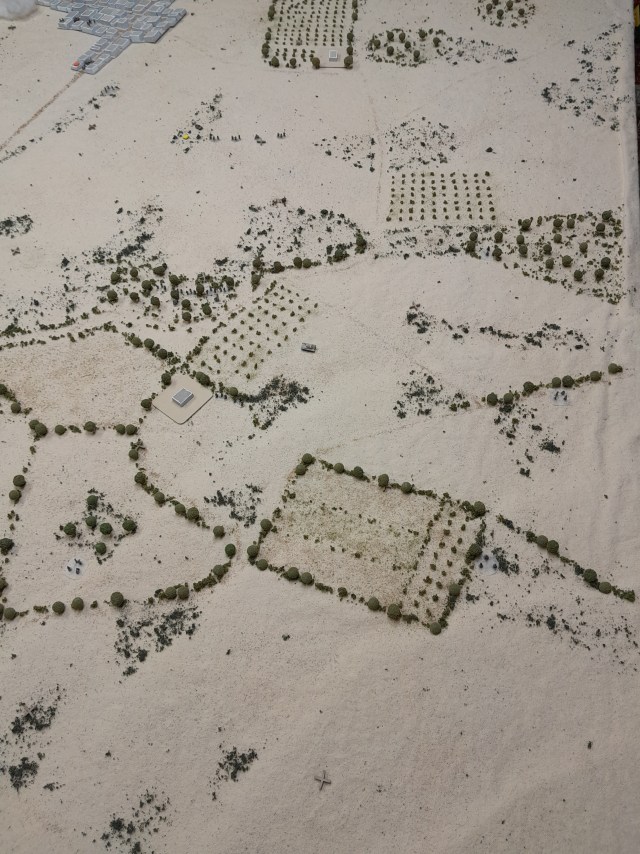
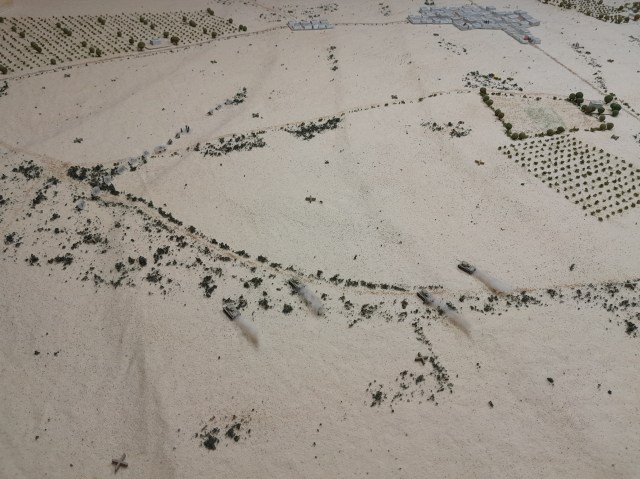
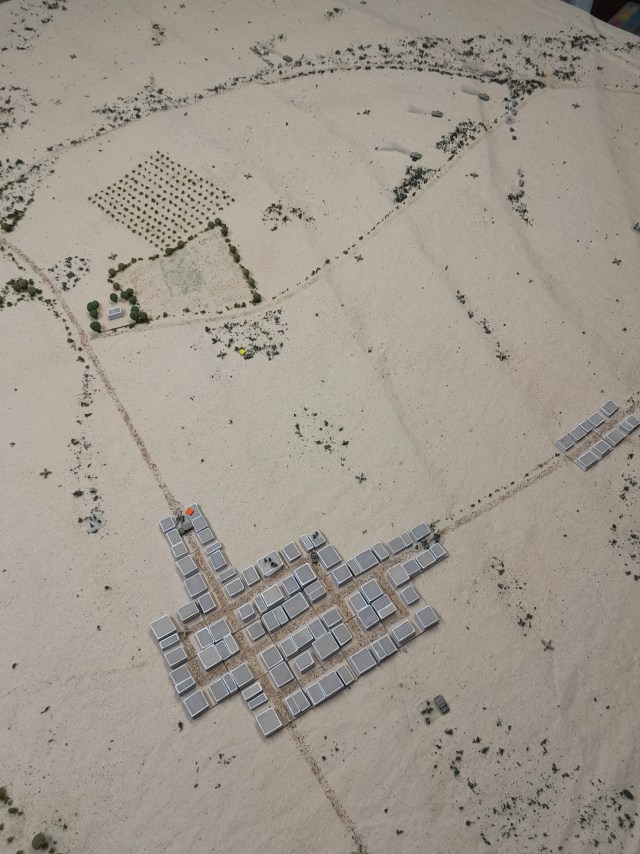
I use a ‘cloth over foam’ method as a base for the tabletop (usually flannel bedsheets over 6mm insulation boards) using contour information from https://contourmapcreator.urgr8.ch/ from either a historical location or -if an imaginary battle- from a suitable place: Relying on reality to (mostly) create the battlefield is easier (imo) than fretting over terrain set up, and helps to model the challenges faced by the commanders at the time. It can be a tad tedious cutting the levels, but since (for myself) the enjoyment of the results outweighs the annoyance it’s the path I choose to take – ymmv.

Built Up Areas
50m x 50m cardboard(~1mm?) with simple foam blocks – these were intended to be test pieces that would be replaced by nicer 3D prints, but…well…time has passed…and they still work, so…
Farmsteads
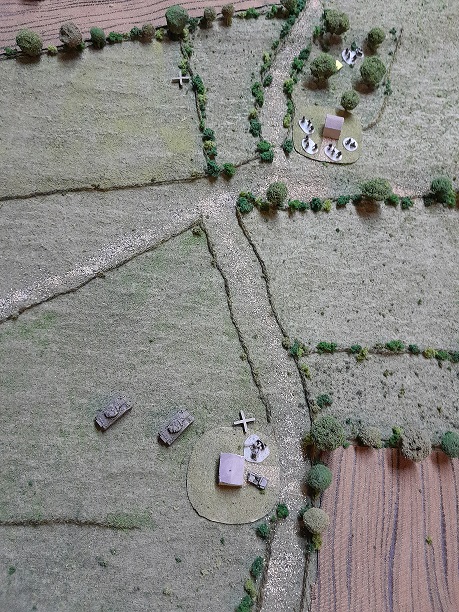
This shows a Rifle platoon w/att Pzrshrk in the upper farm and an AT section in lower farm.
Village / Town
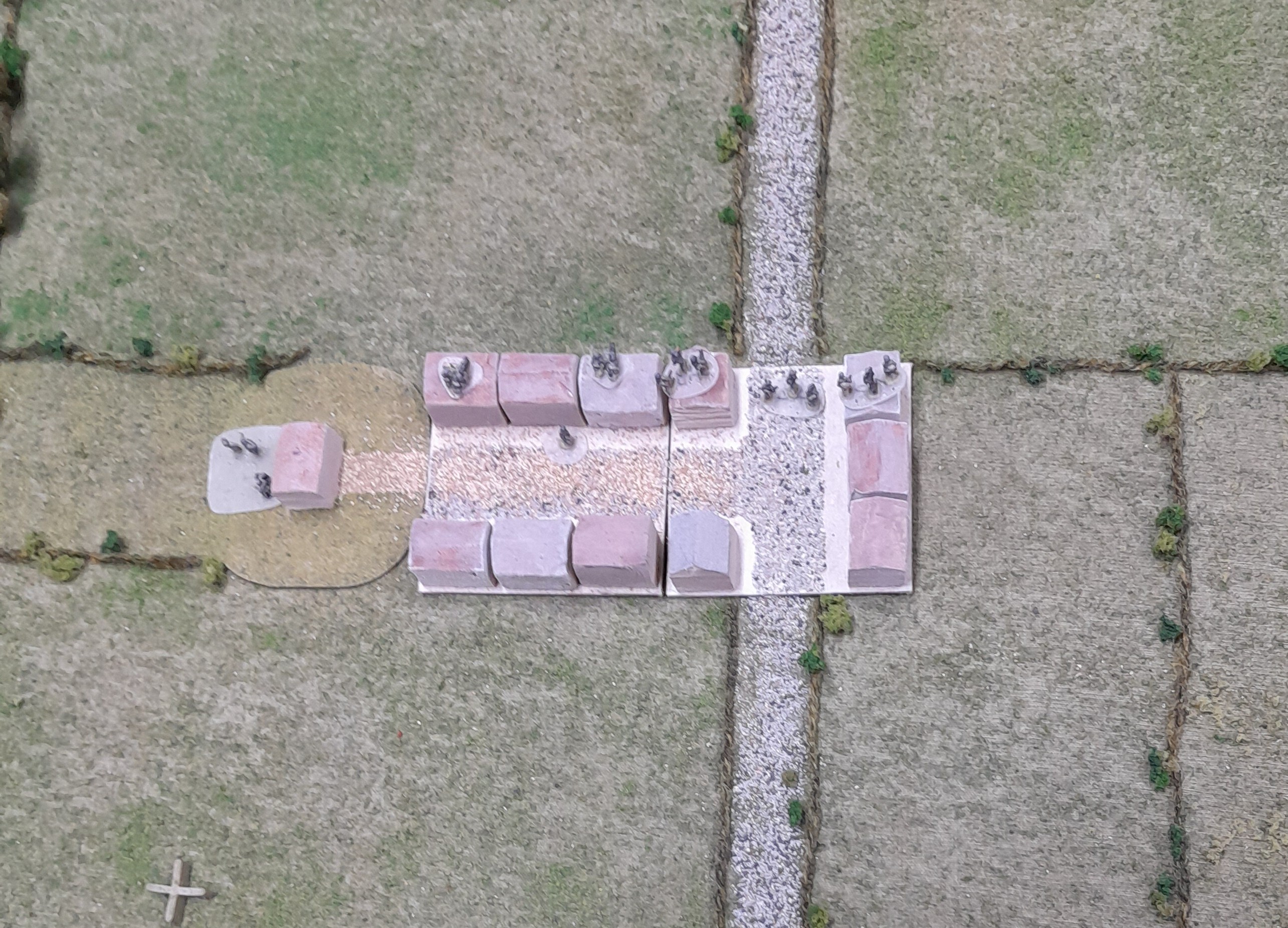
This shows (from left to right) a Company HQ in farm on edge of BUA holding an MG platoon (w/HQ ‘order’) and Rifle platoon.
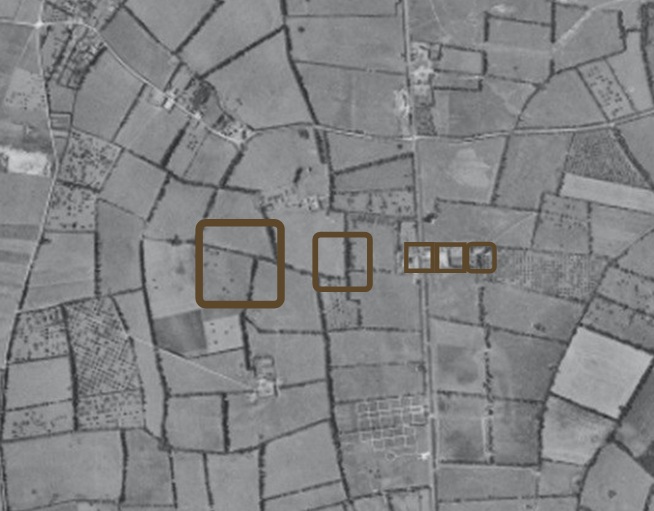
How does the BUA size compare to what it’s meant to represent?
This shows my BUA bases on a recon photo of the area in the Village/Town example shown above, along with 100x100m and 150x150m footprints – which would be hard to use without seriously rearranging/altering the battlefield.

